Last updated November 23, 2026
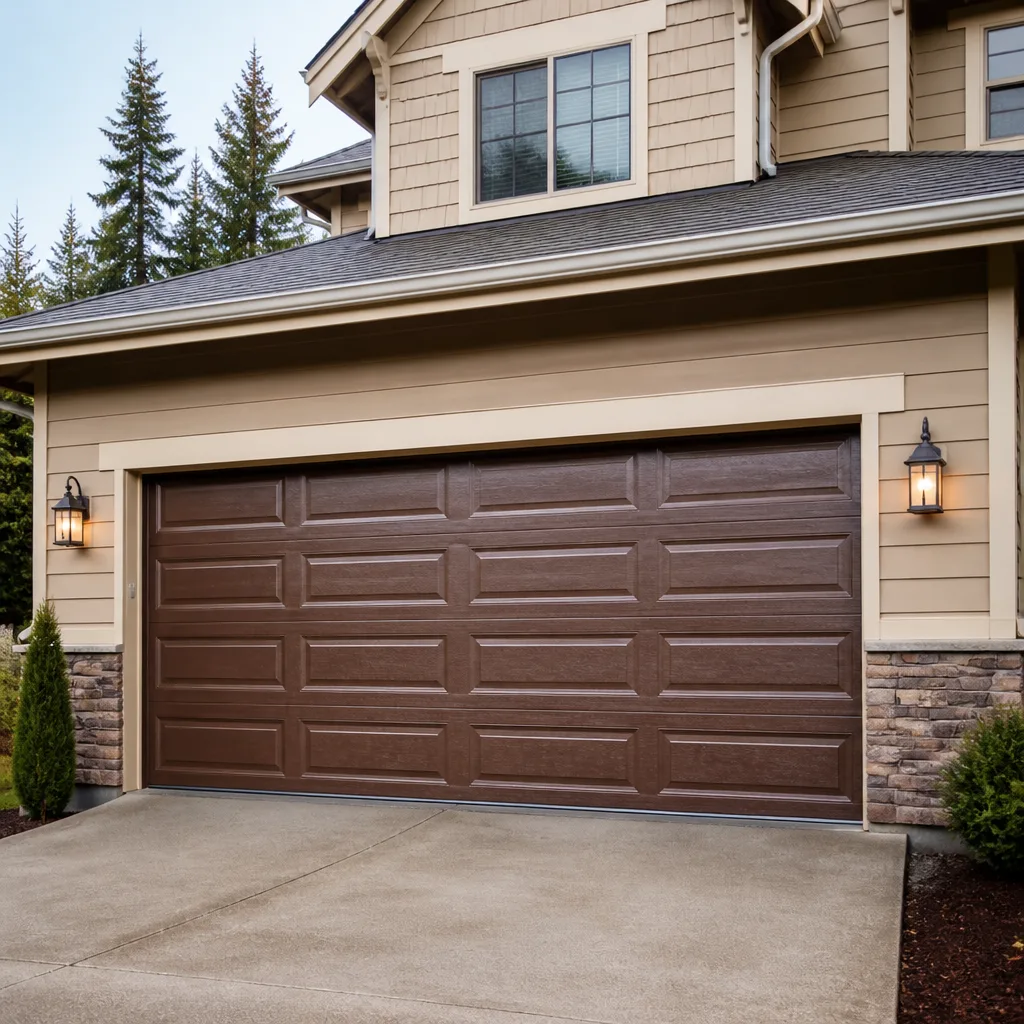 Raised-panel steel
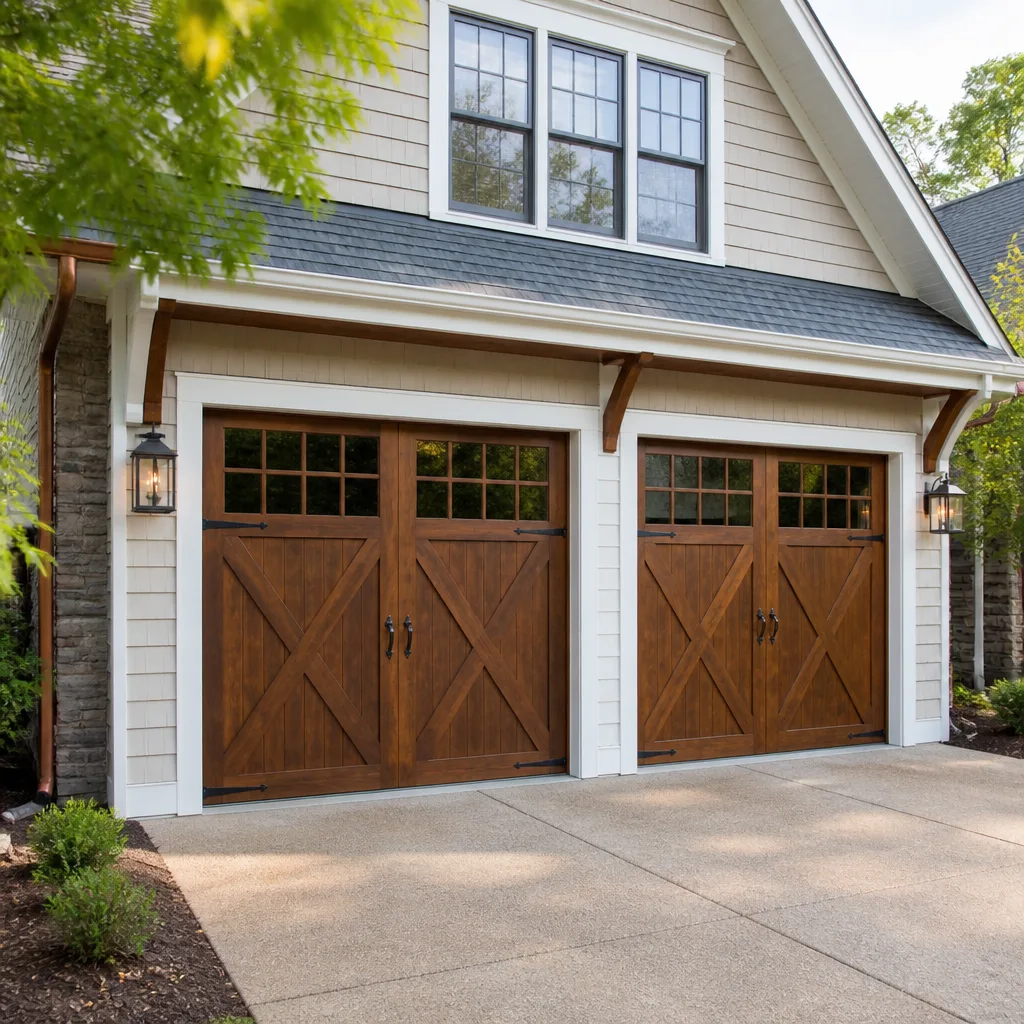 Carriage house
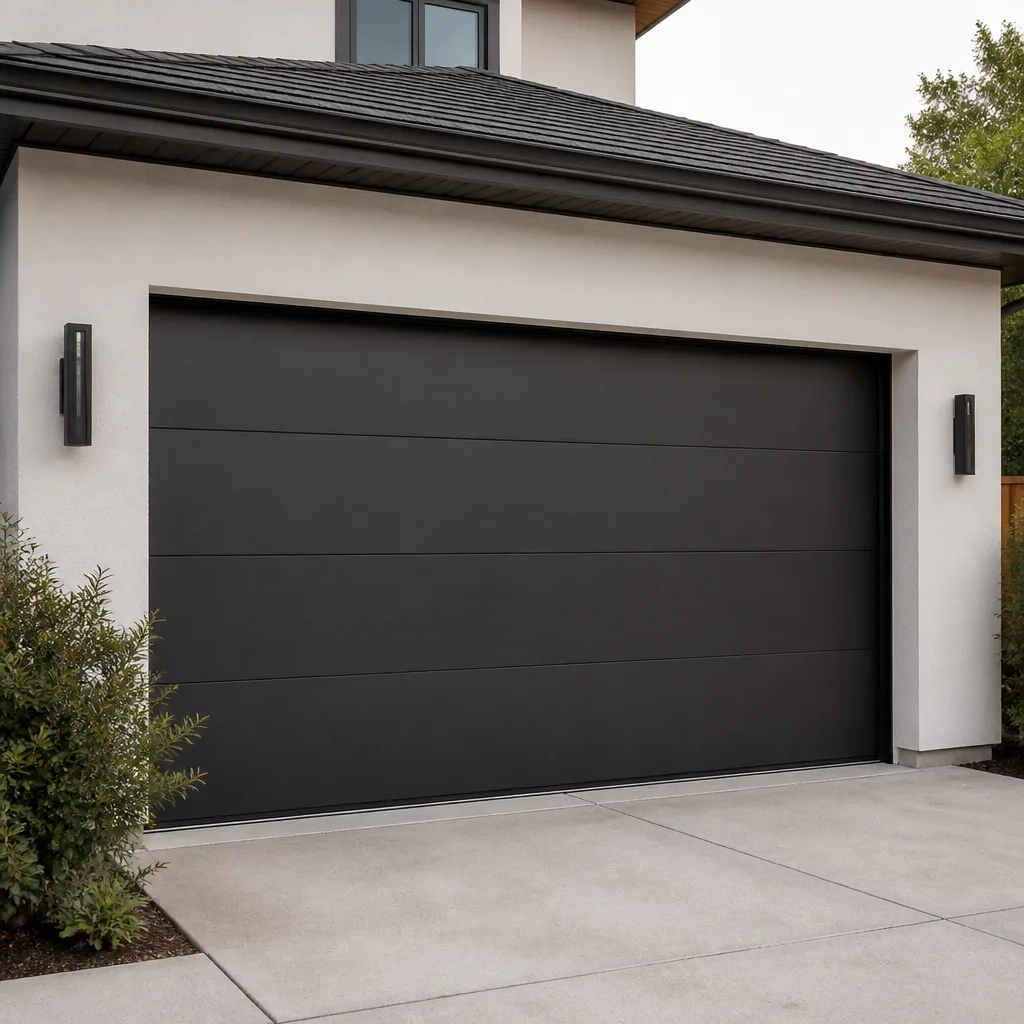 Modern flush
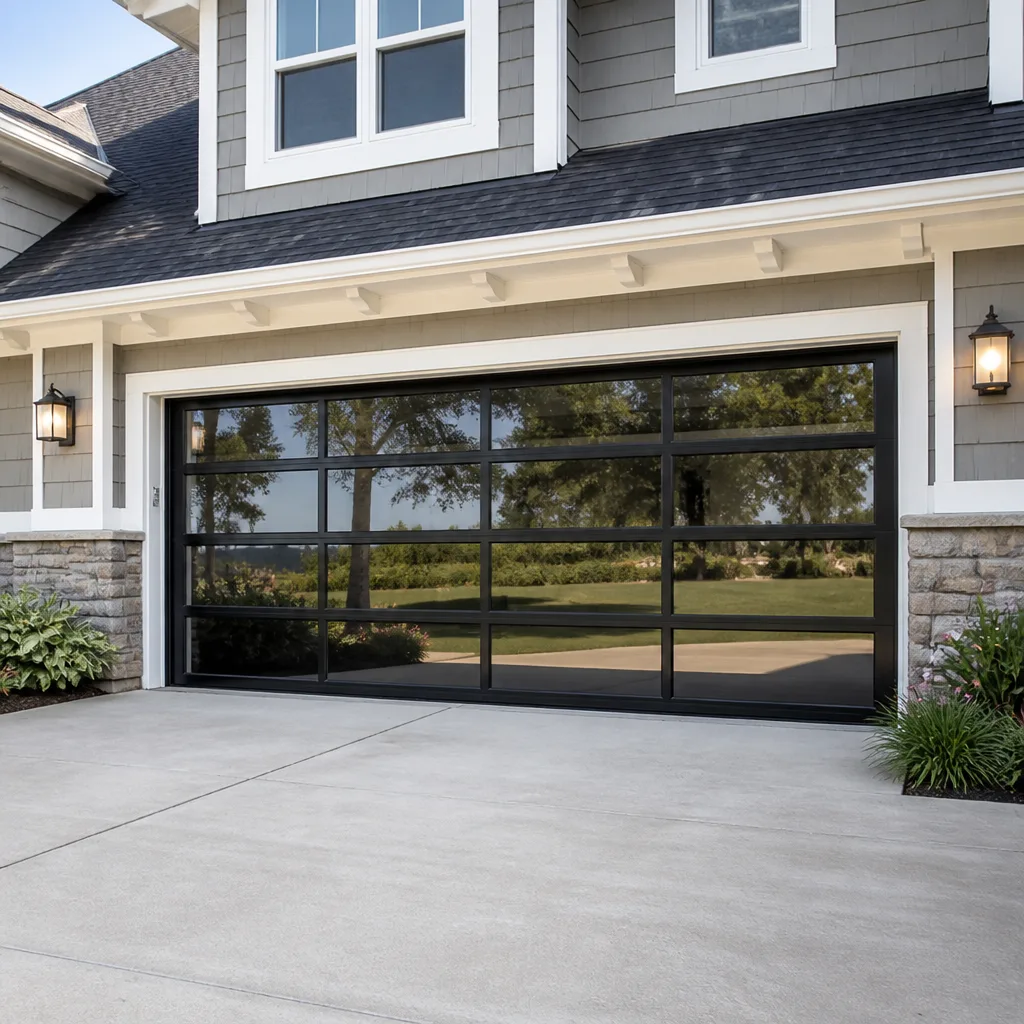 Full-view glass
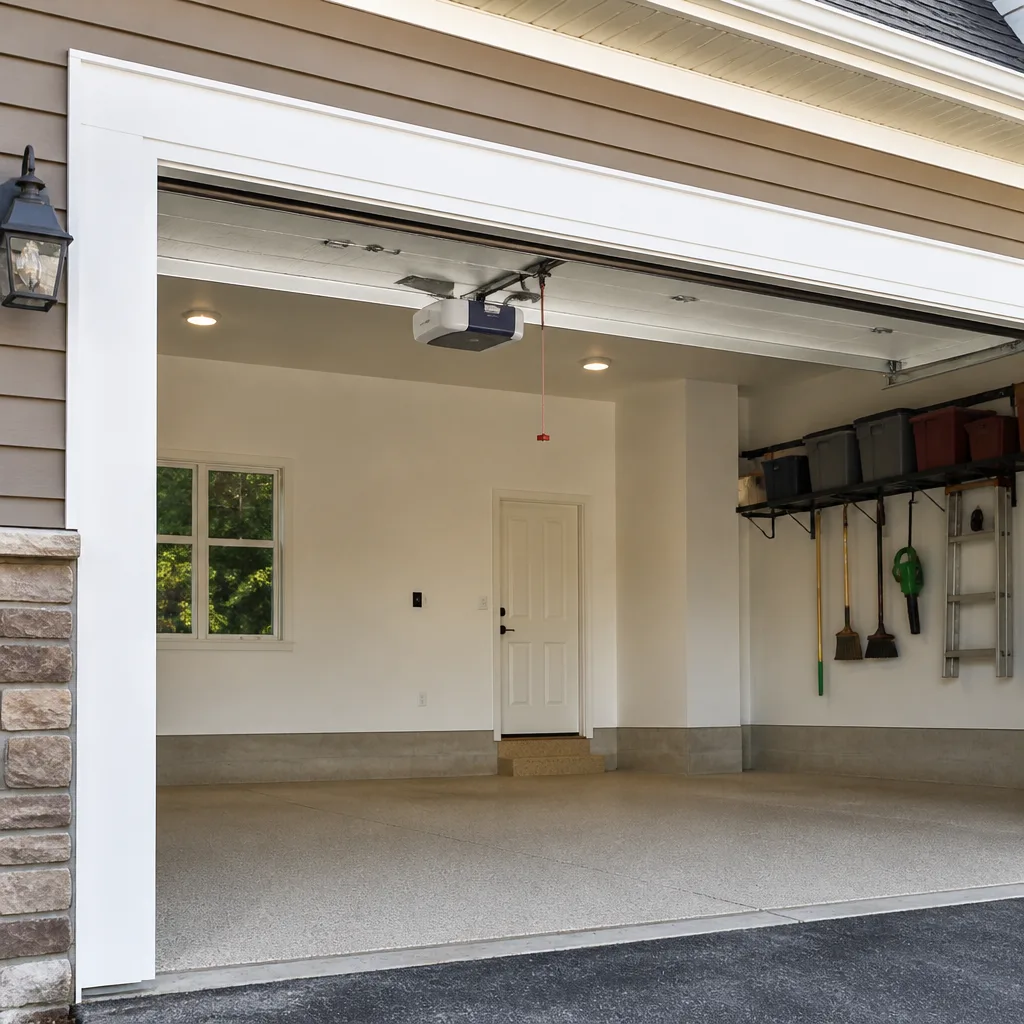 LiftMaster openers
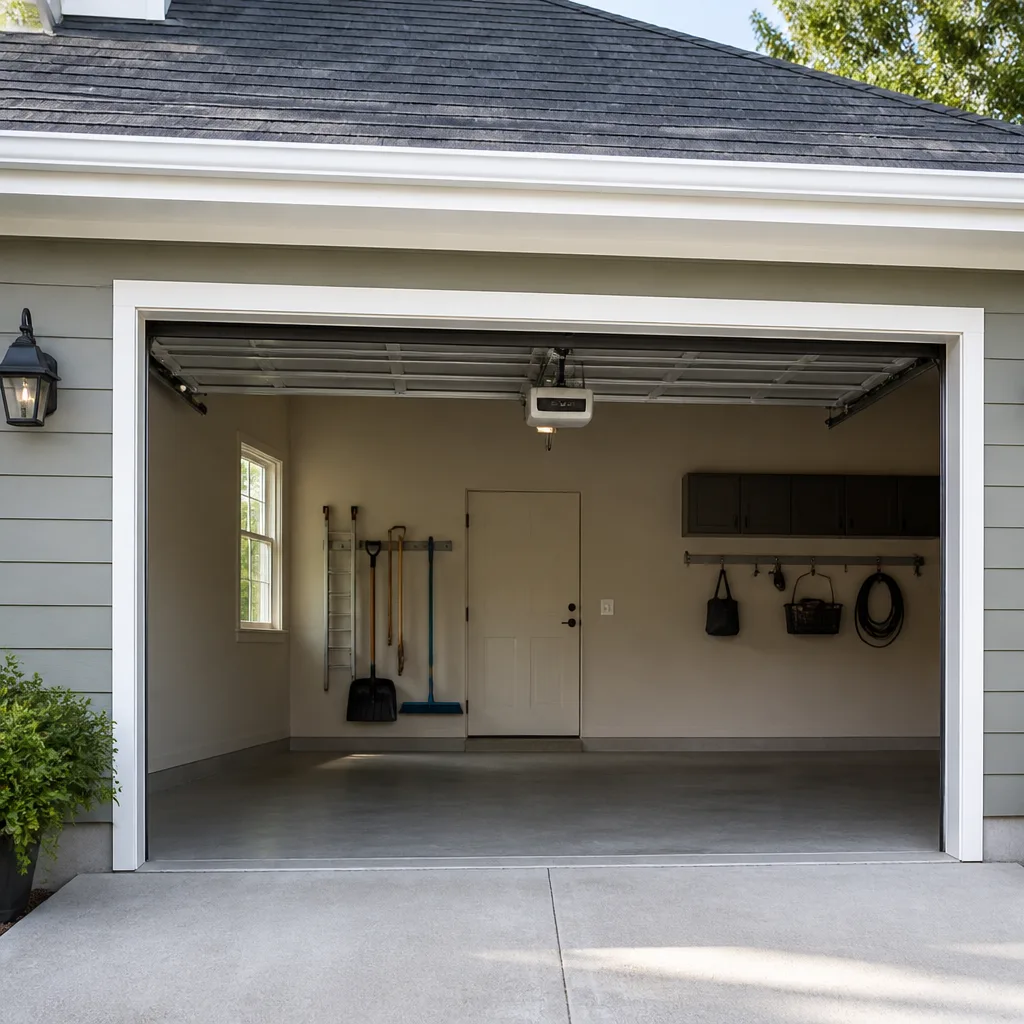 Chamberlain openers
Full 25-point door and opener safety check with every visit - springs, cables, rollers, tracks, and your LiftMaster or Chamberlain opener included
You get a price before we start. It does not change when the pro arrives.
Get your free estimateThe Complete Guide to Garage Doors in Cottage Grove
Most garage door advice you’ll find online is written for a national audience that doesn’t exist. It talks about “typical” doors and “average” climates, as if a door in Arizona faces the same stresses as one in Cottage Grove. It doesn’t. Here’s the part most homeowners miss: a garage door isn’t a collection of separate parts that fail one at a time. It’s a single mechanical system, and when one component wears, the others take the load. Understanding that system – the springs, the cables, the tracks, the panels, and the opener working together – is what separates owners who replace things over and over from those who fix the actual problem once. This guide walks through the hardware, the housing stock, and the climate pressures that shape garage doors in Cottage Grove, so you can make a decision you won’t have to redo next year.
Quick Answer
A garage door in Cottage Grove is a load-bearing mechanical system, not just a big panel on a track. Most of the repair and replacement decisions homeowners face come down to three questions: is the failure in the door hardware (springs, cables, tracks, panels) or in the opener, how old is the hardware, and is the door still structurally sound. Repair the component when the rest of the system is sound. Replace the door when panels, tracks, or the frame are compromised. Address the opener separately when it’s the bottleneck. In a freeze-thaw climate like Cottage Grove’s, the answer usually comes down to spring type, door age, and how the door has been maintained through the seasonal swings.
Styles & brands we work with
- Raised-panel steel
- Carriage house
- Modern flush
- Full-view glass
- LiftMaster openers
- Chamberlain openers
Table of Contents
- How Cottage Grove’s Housing Eras Shape Your Door
- Why Your Garage Door Is the Largest Moving System in Your Home
- Door Problem or Opener Problem? How to Tell the Difference
- How to Read Your Existing Hardware
- Springs, Cables, and Tracks: What Actually Fails First
- What Freeze-Thaw Cycles Do to Garage Doors in Cottage Grove
- The Decision Map: Repair, Replace, or Upgrade the Opener
- A Simple Maintenance Routine for Cottage Grove Homes
How Cottage Grove’s Housing Eras Shape Your Door
Cottage Grove wasn’t built all at once. The city grew in waves, and each wave left behind a specific kind of garage door with its own hardware, its own spring type, and its own common failure pattern. If you know roughly when your house was built, you can often predict what’s going on in your garage before you even open the door.
The 1990s subdivisions that spread across Cottage Grove during that decade’s housing boom mostly came with builder-grade doors and openers. Those doors are still in service on a lot of homes. That means the torsion or extension springs on many of them have been cycled hundreds of thousands of times, and the openers – often a Craftsman or a Wayne Dalton unit – have outlived the service life they were designed for. If your door sounds louder than it used to, or reverses for no obvious reason, age is a real suspect.
The newer South Grove developments went up with different hardware. Doors are typically heavier steel sandwich panels, openers are more often LiftMaster or Raynor units with battery backup and modern safety sensors, and the tracks are usually heavier gauge. Failures in these homes tend to cluster around the opener’s logic board, the safety sensors, or the springs after the first decade of use.
- 1990s-era Cottage Grove homes: builder-grade panels, extension springs common, openers near or past end of life, more frequent track misalignment.
- 2000s-era homes: heavier steel doors, mix of torsion and extension springs, openers with more electronics and more sensor-related faults.
- South Grove and newer developments: insulated sandwich-panel doors, torsion springs standard, smart or battery-backup openers, failures skew toward electronics and sensors before hardware.
None of this is a knock on the original builders. It’s just how door hardware ages in a Minnesota climate. Knowing the era of your home points you toward the most likely culprit faster – and that saves diagnostic time on a service call, whether you’re in Cottage Grove or anywhere nearby.
Why Your Garage Door Is the Largest Moving System in Your Home
Think about how often your garage door runs. Two cycles a day is a light household. A family with kids, groceries, bikes, and a car that comes and goes puts the door through four, six, sometimes ten cycles a day. Multiply that by 365, times a decade, and you’re into numbers that would exhaust almost any other mechanical system in your home.
What makes the door unusual isn’t just the cycle count. It’s the load. A double-car door can weigh several hundred pounds, and every bit of that weight is held by two springs, two cables, and a track – all of which have to move together with the opener doing only a fraction of the actual lifting. The opener isn’t lifting the door. It’s guiding it, and the springs are doing the heavy work.
That distinction matters in a cold climate. Springs are steel, and steel behaves differently at zero degrees than it does at seventy. Cables expand and contract. Tracks tighten and loosen as the ground shifts with frost. Rollers that spin freely in July can drag through the first cold snap of the season. We see this pattern play out across Cottage Grove every winter: a door that worked fine in October suddenly strains, reverses, or won’t close all the way in January.
Because the door is the largest moving mechanical system in the home, small wear compounds fast. A roller that’s slightly flat adds drag. Drag adds load. Extra load flattens the spring faster. By the time the door stops working, the failure is rarely just one part – it’s the cascade.
If your door is straining, making new noises, or behaving strangely after a cold snap, our garage door repair Cottage Grove team can diagnose the whole system rather than just replacing the part that broke last.
Door Problem or Opener Problem? How to Tell the Difference
This is the most common misdiagnosis we see. A door that won’t work usually gets blamed on the opener, because the opener is the part you interact with. You press the button, nothing happens, so the button – or the thing connected to it – gets the blame. Often it’s the door itself that’s fighting the opener.
Here’s a simple way to think about it. The opener has three jobs: it starts and stops the door, it reverses when it senses an obstruction, and it holds the door locked when it’s closed. The door has to be liftable by hand for the opener to do any of those jobs properly. When the door isn’t balanced, the opener is making up for it, and over time the opener burns out trying to lift something it wasn’t designed to lift alone.
A few signals point one way or the other:
- Likely a door problem: The door is hard to lift by hand, hangs up partway, scrapes the track, or won’t stay halfway up when you let go. The opener runs but the door moves reluctantly or unevenly.
- Likely an opener problem: The door lifts fine by hand, but the opener clicks without moving, reverses immediately, or the remote and the wall switch behave differently from each other.
- Likely a sensor or wiring problem: The opener’s light flashes, or the door reverses right at the floor with nothing in the way. The photo-eye sensors or their wiring are usually the cause.
- Disconnect the opener using the emergency release pull cord so you can test the door by hand. Do this only when the door is fully closed and you’re standing clear of the springs and cables.
- Lift the door slowly about halfway. A balanced door rises with steady effort and stays put when you let go. A door that fights you, drops, or slams shut is the source of the problem.
- If the door moves freely, the opener or its sensors are the likely fault. If the door doesn’t, you’re dealing with hardware, and the opener is only the messenger.
If you’ve narrowed it to the opener, our garage door opener repair service handles all the major brands. If the door itself is fighting back, that’s a door hardware call – spring, cable, track, or roller work – and it needs a technician, not a guess.
How to Read Your Existing Hardware
Before you call for a repair or ask about a replacement, it helps to know what you already have. You don’t need to disassemble anything. You just need to read the labels and look at the geometry. A few minutes of observation can save you a lot of back-and-forth with a technician and tell you whether a replacement quote you’ve been given makes sense.
- Find the door’s brand and model. Most manufacturers put a sticker on the inside of the bottom panel or on the top panel above the door. Clopay, Amarr, Wayne Dalton, and Raynor doors all label their panels, and knowing the brand tells you what panel styles and springs are compatible with your door. Our garage door repair technicians work on all the major brands, so you won’t be pushed toward a replacement just because we don’t recognize the model.
- Identify the spring type. A torsion spring is a horizontal coil mounted on a shaft above the door. Extension springs are two long springs running along the horizontal tracks on each side. Torsion and extension springs wear differently, fail differently, and have different replacement costs.
- Note the track gauge. The horizontal track should be straight and smooth. A track that bows, dents, or has visible cracks is a replacement candidate, not a repair candidate.
- Weigh the panel style. A single-layer steel panel is much lighter than an insulated sandwich panel of the same size. If you’ve been quoted for a heavier door, that affects spring sizing – and the springs you have may not be rated for a heavier panel.
- Check the opener label. The brand and model are on the motor housing. Craftsman, LiftMaster, Raynor, and Wayne Dalton openers all use slightly different logic and remote types, and knowing which one you have tells you whether a repair is straightforward or a full replacement is more sensible.
Write all of this down – the door brand, the panel type, the spring type, the opener brand and model. When you call a specialist, that information shortens the diagnostic step and helps you get a useful estimate faster.
Springs, Cables, and Tracks: What Actually Fails First
In our experience, the order of failure is fairly predictable. Springs go first, then rollers, then cables, then tracks. Panels are usually last unless the door has been physically struck or the tracks have been neglected for years.
Springs carry the weight of the door every time it moves. A torsion spring is a coiled steel bar under enormous tension, mounted on a shaft above the door. An extension spring is a coil running along the track on each side. Both are designed to cycle a certain number of times before they weaken and break. When one goes, the door usually stops working immediately, and a torsion spring failure often produces a loud bang that gets the whole house’s attention.
Cables run alongside the springs and help hold the door’s weight on the track. When a spring breaks, the cables can snap or come off the drum. If a cable comes off while the door is up, the door can drop unevenly. That’s why we always treat a broken spring as a two-part job – the spring and the cables – and why we ask you to stop using the door until it’s seen.
Rollers and hinges are the wear items that get overlooked. Nylon rollers last far longer than steel ones and stay quieter, especially in cold weather. Hinges crack and loosen. A door that’s “noisy” is often just telling you the rollers and hinges need attention before they take the rest of the system down with them.
Tracks should be near the bottom of the list, but they get damaged more than they fail. A car bumper, a ladder, a kid on a bike – the vertical track takes the hit, and once it’s bent, the door can’t track smoothly. Straightening a bent track is a temporary fix at best. Replacement is the answer.
Spring work is one of the genuinely dangerous parts of this trade. A torsion spring holds enough stored energy to cause serious injury in an instant, and the winding bars and technique aren’t things you can safely pick up from a video. We handle spring work with the right tools and training because it’s exactly the kind of job where getting it wrong has consequences. Our garage door spring repair pages cover the specific scenarios in more depth, and we’re happy to talk through your door before you make a decision.
What Freeze-Thaw Cycles Do to Garage Doors in Cottage Grove
Cottage Grove sits in a part of Minnesota where winter delivers a specific pattern: cold snaps that drive temperatures well below freezing, followed by thaws that bring them near or above, sometimes several times in a single season. That cycle is hard on garage doors in a way that a steady cold wouldn’t be. The door doesn’t just get cold; it gets cold, warms up, cools back down, and moves through the whole cycle over and over between November and March.
What does that actually mean for the hardware?
- Lubricants thicken. Lubricant that flowed smoothly in October becomes stiff in January. Rollers drag, hinges stick, and the opener works harder on every cycle.
- Metal contracts and expands. Tracks tighten in cold, loosen in thaw, and the fasteners that held them in summer can work loose over a winter.
- Seals and weatherstripping harden. The bottom seal on the door flexes with every cycle. Cold stiffens it, and small cracks appear over one or two winters. Once it’s cracked, it lets cold air and moisture in, and the door stops sealing properly against the floor.
- Cables and springs cycle harder. A door that runs smoothly in July runs with more resistance in February, and that resistance accelerates spring wear.
- Safety sensors fog or freeze. The photo-eye sensors at the bottom of the track, which stop the door if something’s in the way, can get coated with frost or driven snow. When that happens, the door reverses itself for no obvious reason.
A door that’s behaving strangely in Cottage Grove in January is often telling you something specific about the cold, not the whole system. Lubrication, a fresh bottom seal, sensor cleaning, and a track adjustment after each cold snap go a long way. If your door is failing repeatedly through a winter, the underlying hardware probably needed attention before the season started.
The Decision Map: Repair, Replace, or Upgrade the Opener
This is where homeowners spend the most money unnecessarily. The instinct is to replace the door when a part fails, or to buy a new opener when the door is the problem. Neither is right most of the time. Here’s the decision map we use.
Repair the component when the rest of the system is sound. A single broken spring on a door that’s otherwise healthy is a repair, not a replacement. New rollers and hinges on a door with good panels and straight tracks is a repair. A safety sensor replacement is a repair. If the door is balanced, the panels are solid, and the tracks are straight, repair is nearly always the better path.
Replace the door when the structure is compromised. If the panels are dented or water-damaged, if the tracks have been bent multiple times, if the frame has rotted, or if the door is a builder-grade model that’s been repaired repeatedly and is still failing, a replacement ends the cycle. Replacement is also the right call when the door is so old that compatible springs and panels for it are no longer made – Clopay, Amarr, and the other major manufacturers all have model histories, and a technician can tell you whether your door is still serviceable.
Upgrade the opener when it’s the bottleneck. The door hardware can be perfectly fine while the opener is the part that’s failing. Aging Craftsman and Wayne Dalton openers, in particular, reach a point where the electronics, sensors, or remote system fail more often than the mechanical parts. A new LiftMaster or Raynor opener is a straightforward call when the door itself is healthy and the current opener is the weak link.
Two things to check before any of this:
- Balance test the door. If it’s balanced, the hardware is worth repairing. If not, fix the imbalance first.
- Check the panel brand and condition. A door with a healthy panel and a failing opener is a very different situation from a door with a failing panel and a healthy opener.
When you get a repair quote, ask which failure the technician actually found and whether the repair extends the life of the current door or just resets a component that’s going to fail again. Getting that answer is the difference between the right fix and the easiest upsell.
A Simple Maintenance Routine for Cottage Grove Homes
None of what’s in this guide is a mystery to a technician, and most of it doesn’t require one to prevent. A few minutes of maintenance per season can add years to the springs, cables, and opener on a Cottage Grove door. The routine is simple, and the time goes fast.
- Lubricate the springs, rollers, and hinges with a garage-door-rated lubricant (not WD-40). Do it before the first cold snap and again in early spring.
- Wipe down the safety sensors and make sure the photo-eye lenses are clean of dust, frost, and debris.
- Look at the bottom seal for cracks or tears. A cracked seal is cheap to replace and prevents a lot of cold-weather problems.
- Check the tracks for bends, dents, or loose fasteners. Do this from the ground, by eye, not by climbing.
- Watch the door move once a month. Any new noise, hesitation, or uneven motion is worth a call.
- Test the balance every six months with the emergency release (only while standing clear of the springs and cables). A door that no longer holds halfway is telling you the springs are weakening.
Beyond that, leave the spring, cable, and torsion work to a trained technician. Springs carry enough energy to cause serious injury, and the tools and techniques for safe spring replacement aren’t something to learn on the job. A door that’s making a loud bang, dragging on the track, or refusing to open is a professional call – not a household project.
Common Mistakes to Avoid
- Assuming a stuck door is an opener problem. Most of the time, the opener is reacting to a failing door. Check the balance by hand before you buy an opener; you’ll save yourself the wrong repair.
- Replacing springs without checking the cables. A broken spring usually comes with cable damage and drum wear. Replacing just the spring on a door that needs cables too means going back in next winter.
- Ignoring the door in the fall. Cottage Grove’s first cold snap is hard on lubricant, seals, and rollers. Lubricating and cleaning before the freeze saves the door from a February failure.
- Forgetting that torsion springs come in pairs. A door with two torsion springs should have both replaced together. Replacing one and leaving the other aged spring behind usually means a second service call.
- Mixing door and opener brands without checking compatibility. Craftsman, LiftMaster, Raynor, and Wayne Dalton openers each use their own remote systems and logic. Match what you already have before adding openers or accessories.
- Straightening a bent track instead of replacing it. A bent vertical or horizontal track can rarely be made true again. Doors that run on straightened tracks develop roller and hinge wear.
- Waiting for a spring to break before servicing the door. Springs give warning – a strain, a hesitation, a bit of extra noise. Catching that warning is what keeps a repair small.
See the difference
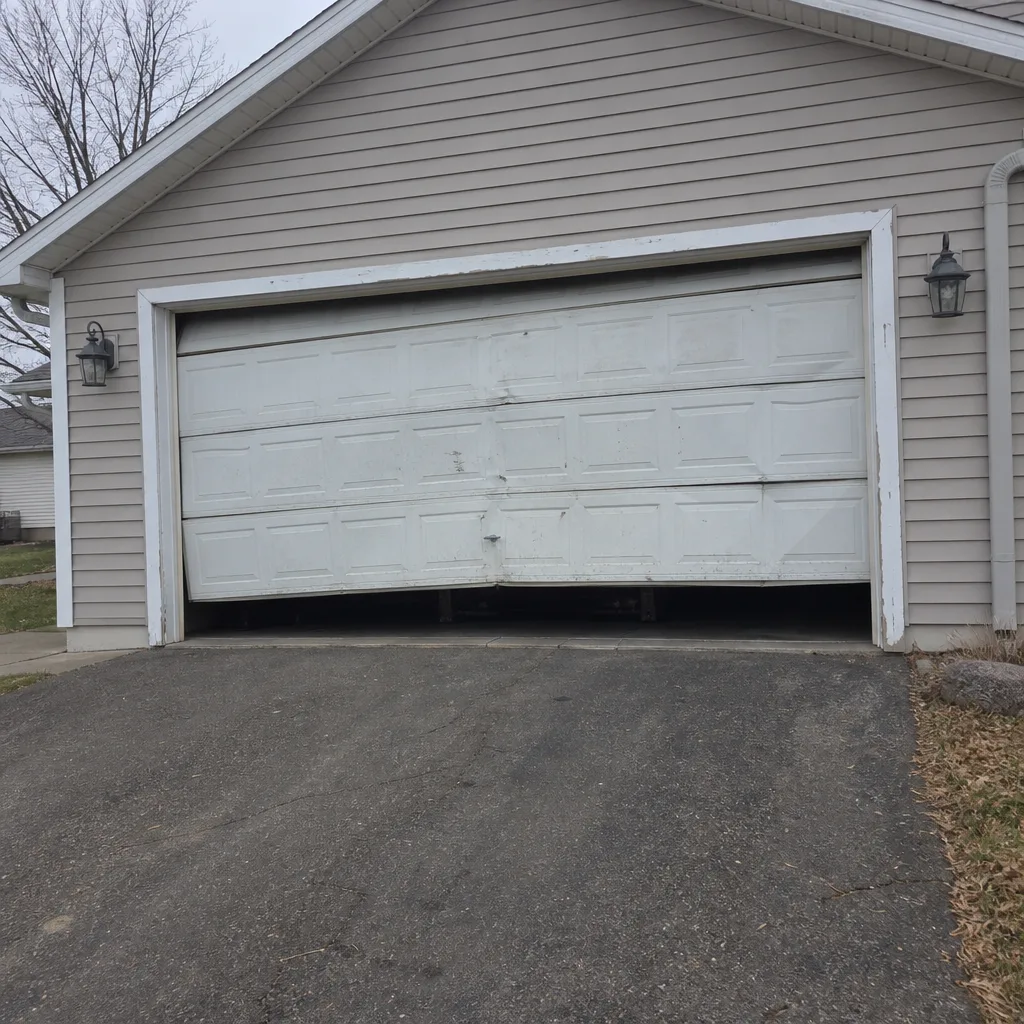 Before
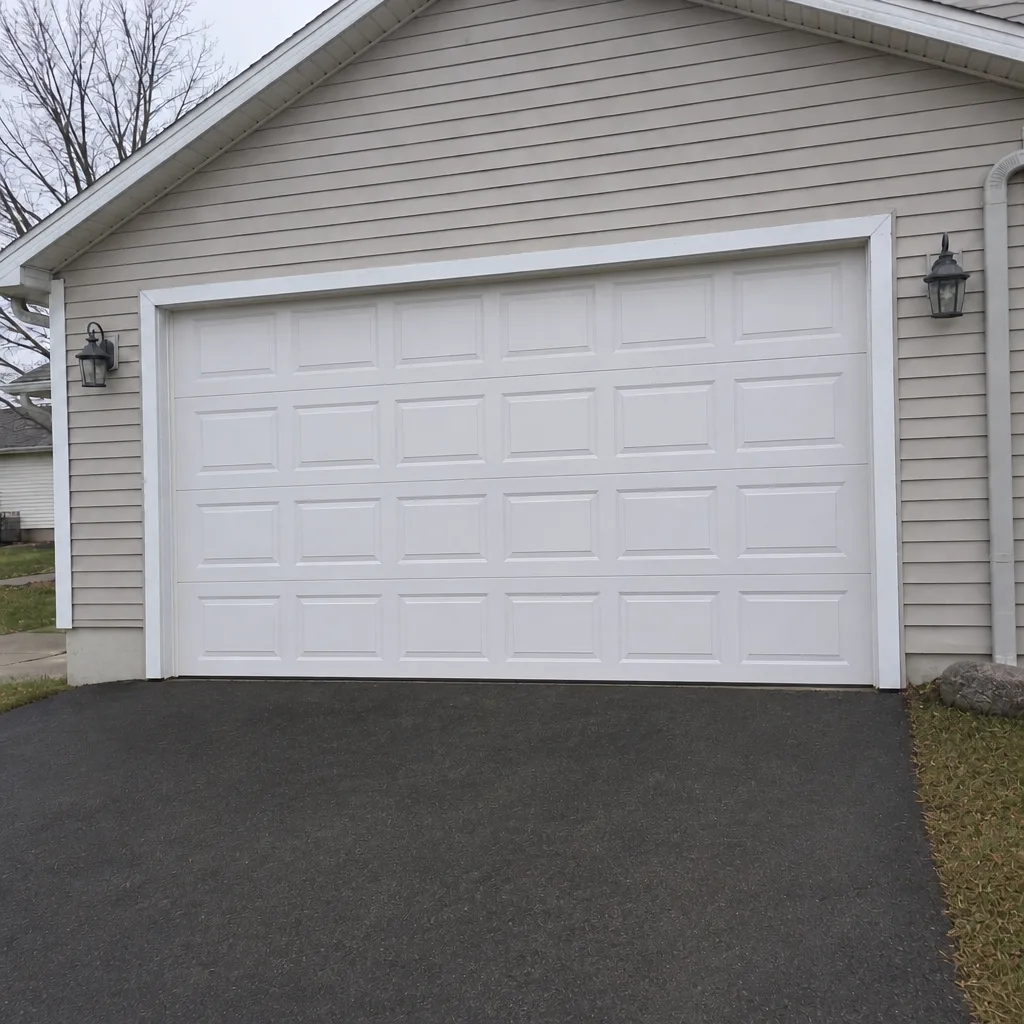 After
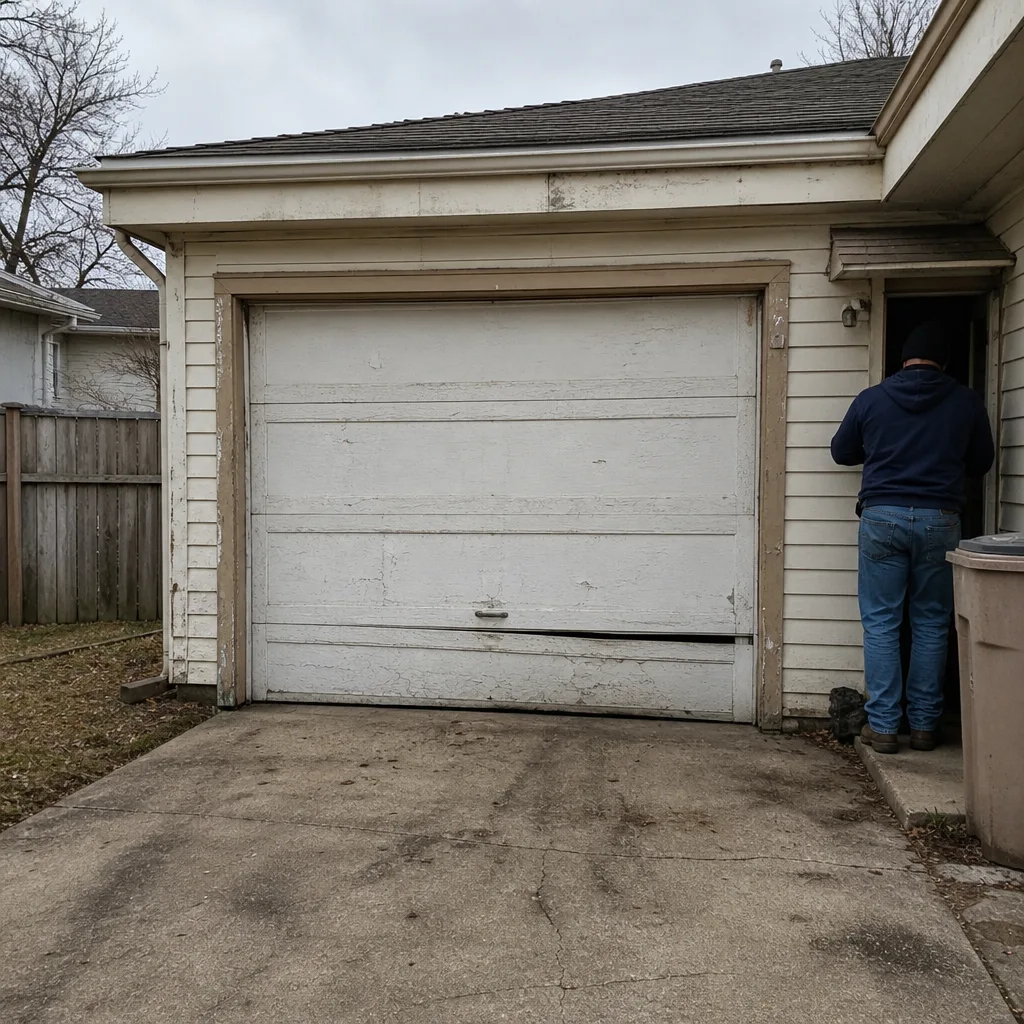 Before
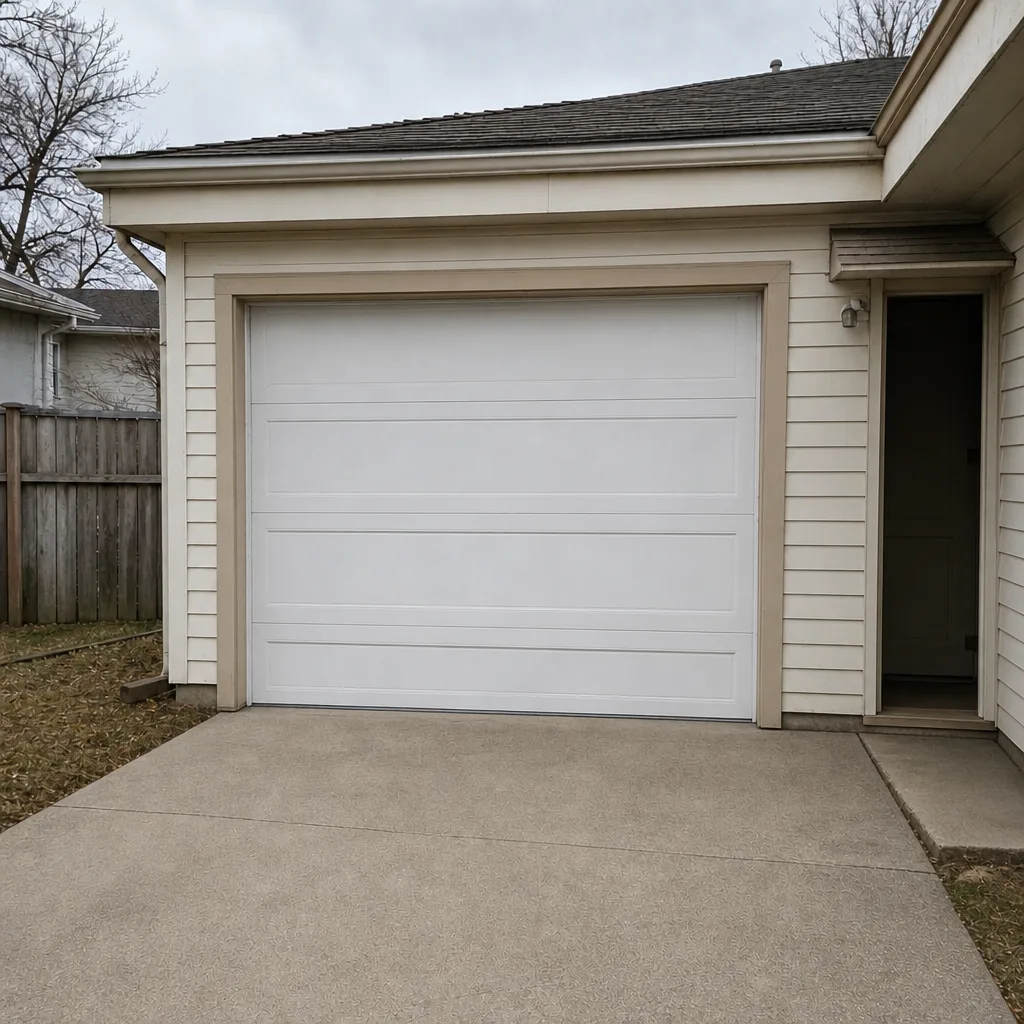 After
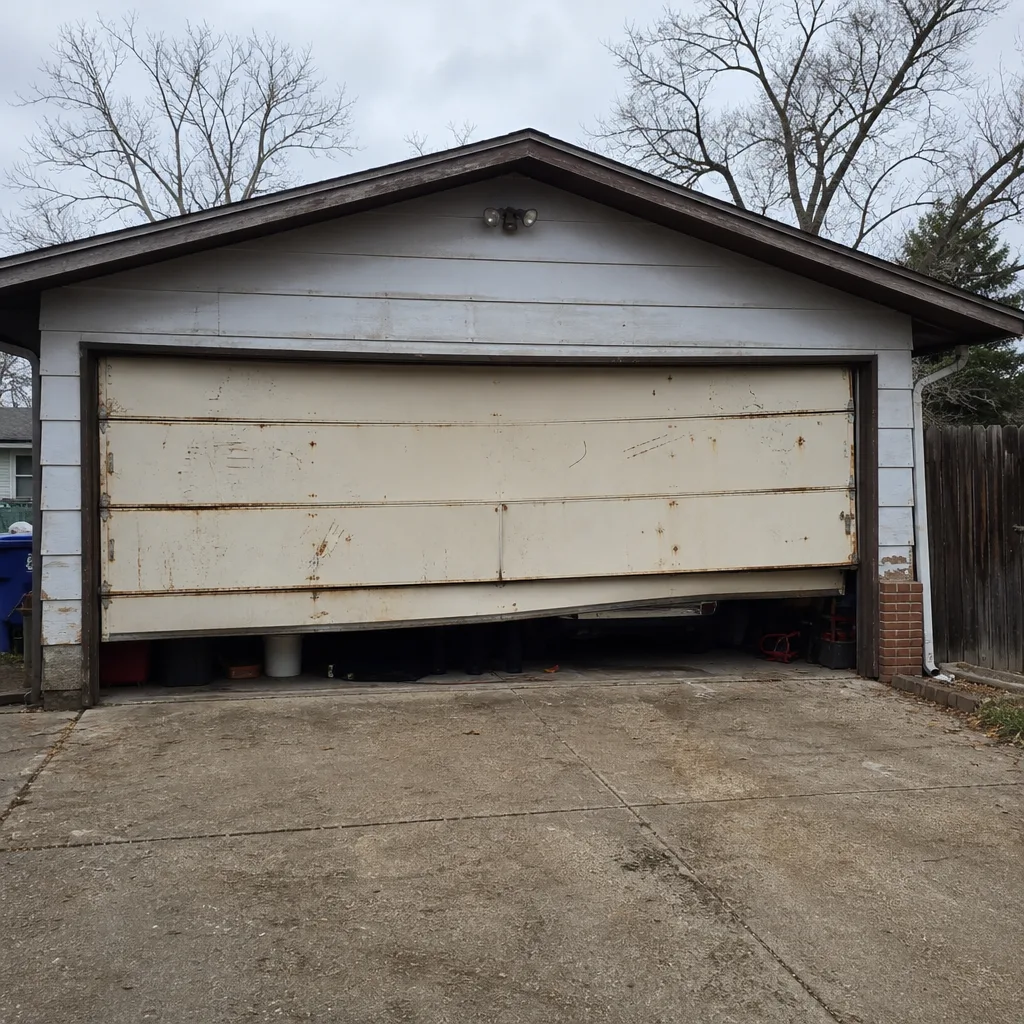 Before
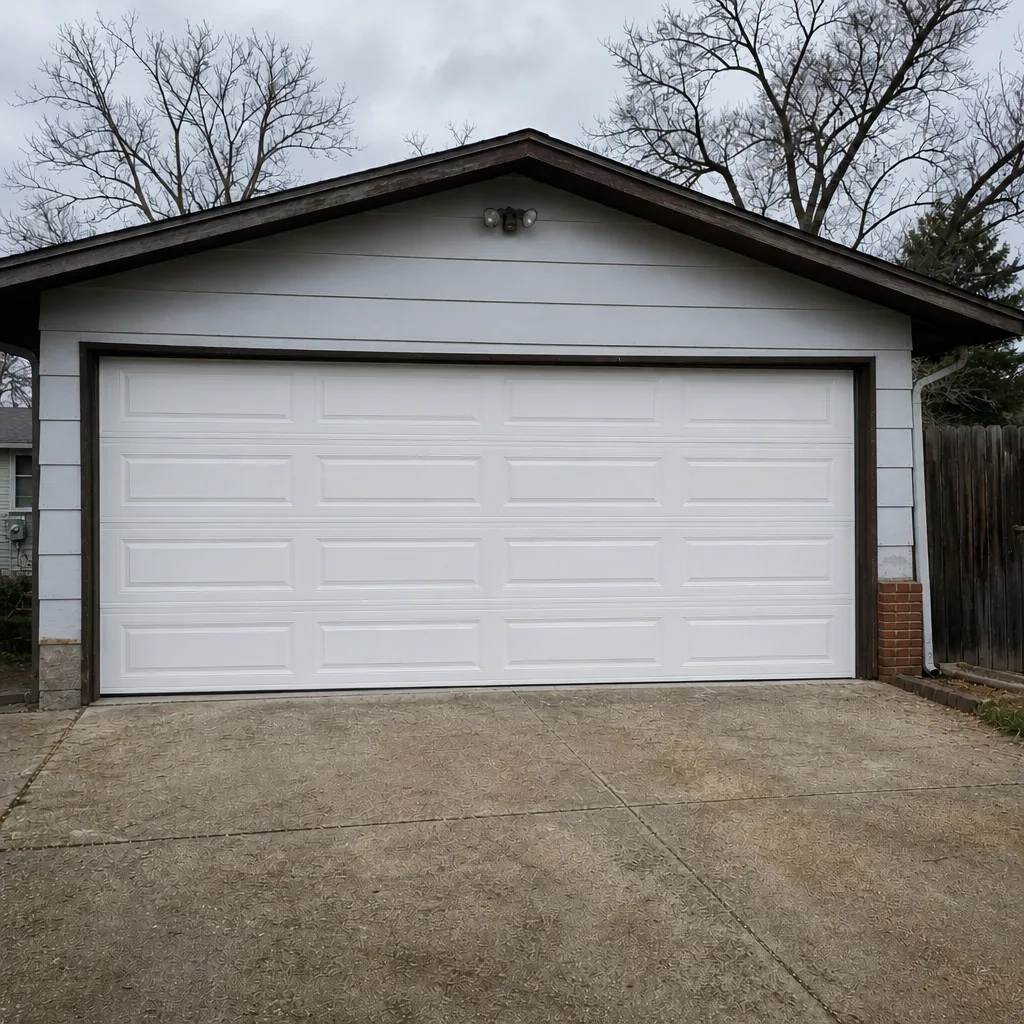 After
When to Call a Professional
Some of what we’ve covered here is DIY-friendly: lubricant, sensor cleaning, seal replacement, visual checks. A lot of it isn’t. If your door has broken a spring, one or both cables have snapped or come off the drum, the door has fallen off the track, the panels have been physically damaged, or the door won’t close and stay closed, stop using it and make the call. Same if your opener is running but the door isn’t moving, if the opener reverses immediately with nothing in the way, or if the door has become noticeably harder to lift by hand over a few months.
Spring and cable work is the highest-risk part of this trade. The stored tension is substantial, and a mistake can be serious. A trained technician has the tools, the technique, and the safety experience to do the job safely. Our technicians have up to 13 years of experience, and garage doors are all we do.
Garage Door Repair Cottage Grove offers free estimates in Cottage Grove – call (833) 345-4676. Emergency service is available for situations where a door that won’t close is leaving your home open or a car is stuck inside.
Frequently Asked Questions
Most single-spring repairs in Cottage Grove run in a moderate range compared to full door replacement, and the exact price depends on whether you have a torsion spring or extension spring, the door weight, and whether the cables and drums need attention at the same time. A matched pair of torsion springs is usually replaced together, so a two-spring job costs roughly double a single-spring repair. Call (833) 345-4676 for an exact quote – estimates are free, and the price is quoted and agreed before any work starts.
Test the door by hand with the opener disconnected. If the door lifts smoothly and stays put halfway up, the door is healthy and the opener is the likely fault. If the door fights you, drops, or hangs up, the door hardware – springs, cables, or tracks – is the source of the problem. Our garage door opener repair team can diagnose which side is at fault and quote accordingly.
For repair calls, yes – same-day service is often available, and we aim for a fast response for urgent situations. Installation and full door replacement are scheduled rather than same-day, because the door has to be measured, ordered, and fitted to your opening. For repairs, call (833) 345-4676 and we’ll confirm timing.
No – the price we quote before work starts is the price you pay. We inspect the door, identify the failure, and give you a written estimate before we touch the hardware. If our inspection turns up something we didn’t expect, we stop and quote the additional work before doing anything. You won’t get an invoice bigger than the estimate.
Very likely, yes. We service all the major garage door and opener brands, including LiftMaster, Chamberlain, Genie, Clopay, Amarr, Wayne Dalton, Craftsman, and Raynor. The one brand rule we follow is simple: we work on the brand you already have and won’t push a replacement just because the model isn’t one we’d install new.
The local professionals we connect you with are licensed and insured as their state requires. Spring and cable work is high-tension and dangerous, so we only send technicians trained and equipped for that work – it’s not a job for a general handyman.
Repair is usually the better path if the panels, tracks, and frame are sound. Replace the door when the panels are damaged, the tracks have been bent repeatedly, or the door model is no longer supported for replacement parts. If a technician tells you to replace a healthy door, ask why – you’re entitled to a clear answer.
Lubricate the springs, rollers, and hinges with a garage-door-rated lubricant, clean the photo-eye sensors, check the bottom seal for cracks, and watch the door move once a month. Leave the spring, cable, and torsion adjustments to a trained technician – those are the parts where a mistake can hurt you.
The Bottom Line
Your garage door is a single system, and every repair decision should be made with the whole system in mind. Know the era of your home, know your spring type and opener brand, and test the door by hand before you assume the opener is the problem. Repair the component when the door is sound, replace the door when the structure is compromised, and treat the opener as a separate decision. In Cottage Grove’s freeze-thaw climate, a little lubrication and a clean seal before the cold does more to extend the door’s life than anything else. Garage doors are all we do – and if something’s not right, we’re a phone call away.
For a free estimate or to talk through your door, call (833) 345-4676. We work on the brand you already have, diagnose the actual failure, and give you a written price before any work begins.
Written by the team at Garage Door Repair Cottage Grove.